
By Karen Kerr
One of the most common questions families ask us is deceptively simple:
“How long does it actually take to apply to music school?”
The honest answer is this: the applications themselves may only take a few months to submit, but becoming truly prepared for music school admissions usually takes much longer than most students and parents expect.
That’s because music admissions are fundamentally different from traditional college admissions. Students are not only applying academically — they’re presenting themselves artistically. They’re being evaluated on skill, potential, preparation, creativity, discipline, and fit. And unlike many traditional applicants, music students often need to audition, submit prescreening recordings, prepare portfolios, research faculty, and make decisions about the kind of musical life they want to build.
This is where many families get caught off guard. They assume the process begins during senior year, when in reality, the strongest applications are often built gradually over several years.
That doesn’t mean students need to panic as sophomores. But it does mean the timeline matters more than people realize.
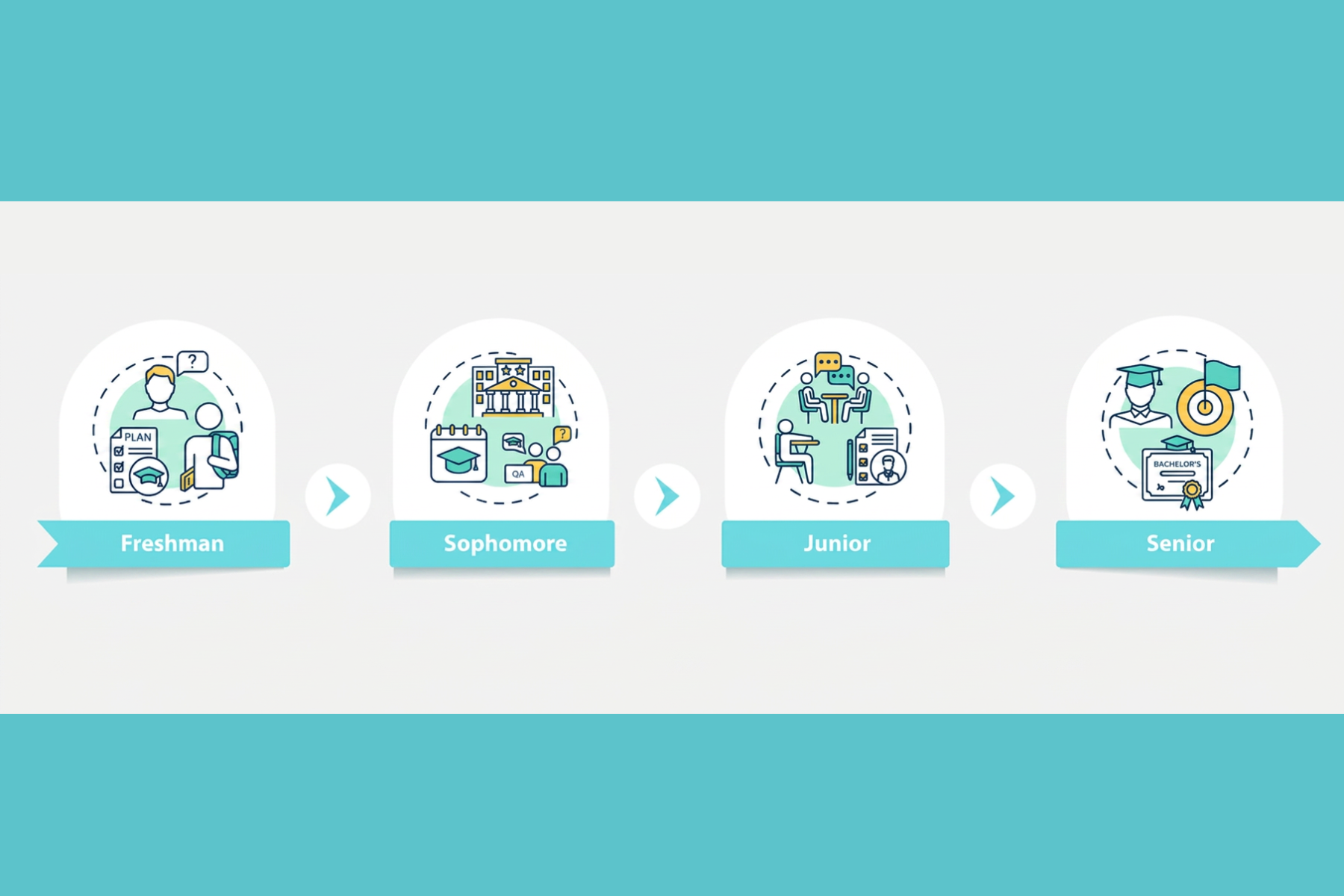
At Inside Music Schools, we’ve worked with families who started planning early and families who came to us late in the process, feeling overwhelmed. What we’ve learned is that the admissions timeline isn’t just about checking off tasks. It’s about giving students enough space to grow into competitive, confident applicants without unnecessary stress consuming their high school years. For music students, if they truly understand all the additional requirements and prepare in advance, the boxes check themselves.
The Biggest Misunderstanding About Music Admissions
Most families think applying to music school is primarily about filling out applications and scheduling auditions.
In reality, the hardest part usually happens long before the application is submitted.
A compelling audition cannot be built overnight. A portfolio cannot be rushed together in a few weekends. Even figuring out which schools are genuinely a good fit takes more time than people expect, especially because music programs vary dramatically in culture, curriculum, faculty, expectations, and career pathways.
And then there’s the emotional side of the process.
Students are often balancing advanced musical training alongside AP classes, ensembles, competitions, performances, part-time jobs, and the normal pressures of adolescence. Parents are trying to support their student while navigating a world that may feel highly specialized and unfamiliar to them.
That’s why the timeline matters so much. Starting earlier doesn’t necessarily mean doing more. Often, it means creating breathing room.
Sophomore Year: The Stage Most Families Underestimate
Sophomore year is rarely about final decisions. It’s about awareness.
This is often when students begin to realize that music may become more than a hobby or extracurricular activity. They start asking bigger questions: What kind of musician do I want to become? What programs even exist? Do I want a conservatory environment or a university experience? Is performance really the right path, or am I more interested in songwriting, composition, production, music business, or multiple disciplines at once?
For parents, this is often the moment when uncertainty begins to creep in. Many feel pressure to “figure everything out” immediately, while others assume there’s still plenty of time and put the process entirely on hold.
Sophomore Year is an Opportunity to Develop
In truth, sophomore year matters because it provides something incredibly valuable: time to develop.
Not every student is fully polished at 15 or 16 years old. Most aren’t supposed to be. But students who begin exploring early usually have more flexibility to strengthen weaknesses, deepen musicianship, and build confidence before the stakes become higher.
This is also the stage where honest assessment becomes important. One of the hardest parts of music admissions is understanding where a student truly stands competitively — not just locally, but within the broader national landscape of music schools and programs.
That clarity can change everything.
Junior Year: When the Process Stops Feeling Abstract
If sophomore year is about exploration, junior year is when the process becomes real.
This is typically when students begin building school lists, researching faculty, visiting campuses, preparing repertoire, and thinking seriously about auditions and prescreenings. And this is often the point when families realize how individualized music admissions really are.
Unlike traditional college admissions, there is rarely one universal path.
A jazz guitarist applying to music programs may have entirely different expectations than a classical vocalist pursuing conservatories. A composition student may need a portfolio rather than a live audition. Some schools prioritize artistic versatility. Others focus heavily on technical precision or stylistic specialization.
This is why generic advice online — including AI-generated research — can only go so far.
Online & AI-generated Research
While AI can help families collect information, music admissions is still deeply personal and nuanced. Understanding fit, readiness, faculty dynamics, artistic goals, and long-term potential requires the kind of insight, collaboration, and communication that only comes through real human experience.
Families often spend months researching schools, only to realize they still don’t fully understand the differences between programs — or whether certain schools actually align with the student’s goals, personality, and current level of preparation.
Parent Tip: This is one of our strong suits. If you need an insider perspective, reach out to us to help you assess and identify the best-fit schools for your student!
Addressing Time Compression
Junior year also tends to reveal another challenge: time compression.
Students suddenly realize they’re balancing academics, performances, repertoire preparation, recording sessions, essays, campus visits, and standardized testing simultaneously. The stress many families associate with senior year often begins much earlier.
And this is exactly why early preparation matters. It’s not about creating pressure. It’s about reducing it later.
Senior Year: The Process Accelerates Quickly
As senior year approaches, the timeline speeds up dramatically.
Applications open. Prescreening deadlines arrive. Recommendation letters are requested. Recording sessions need to happen. Essays have to be written. Audition travel gets scheduled. Every school seems to want slightly different materials submitted in slightly different ways.
For many students, this becomes the first time they’ve had to manage a process this complex independently.
What surprises families most is how emotionally demanding audition season can become. Students are not simply waiting for acceptance letters — they are performing under pressure while being evaluated in an intensely personal discipline.
Music is deeply tied to identity. Rejection can feel personal in a way that surprises even highly accomplished students.
This is also why “best-fit” conversations matter so much. The goal is not simply getting into the most prestigious name possible. The right music school is often the place where a student will be challenged, supported, inspired, and positioned to grow artistically over several years.
Sometimes a prestigious school and a right fit school are the same. Sometimes they are not.
What If You’re Starting the Music School Admissions Process Late?
One of the most important things families need to hear is this: starting late does not mean a student cannot succeed.
Every year, we work with students who begin the process later than they hoped. Some discover their passion for music later in high school. Others simply didn’t realize how involved music admissions would become until junior or senior year.
What changes with a compressed timeline is not necessarily the possibility of success — it’s the strategy.
Students may need to prioritize differently. School lists may need to become more realistic or more focused. Repertoire choices may require refinement. Timelines may need tighter structure and guidance.
Most importantly, families often need reassurance that they are not “behind forever.”
The earlier students begin, the more room they typically have to develop naturally. But even late starts can succeed when families approach the process strategically rather than reactively.
So, How Long Does It Really Take?
Technically, music school applications are submitted over the course of several months. But preparing to apply competitively often takes one to three years of artistic growth, exploration, and planning.
That timeline isn’t meant to intimidate families. It’s meant to help them understand that music admissions is not simply an application process — it’s a developmental process.
And when students are given the right guidance, enough time, and an honest understanding of where they stand, the experience becomes far more manageable.
Navigate Music School Admissions With Clarity
At Inside Music Schools, we help students and families navigate the music school admissions process with greater clarity and confidence — from early exploration through final auditions and decisions. Our goal isn’t just getting applications submitted. It’s helping students find the schools, programs, and opportunities that truly fit who they are becoming as musicians and people.
Ready to see what it’s like to work with an admissions consultant? Reach out to us.
FAQs About How Long It Takes To Apply To Music School
How early should you start preparing for music college applications?
Most students benefit from starting the exploration process during sophomore or junior year of high school. Unlike traditional college admissions, music school applications often involve auditions, prescreening recordings, portfolios, faculty research, and specialized preparation that takes time to develop. Starting earlier gives students more opportunities to strengthen their skills, build confidence, and reduce stress during senior year.
Is applying to music school harder than applying to a traditional college?
Music school admissions are typically more complex because students are evaluated both academically and artistically. In addition to standard applications and essays, many programs require auditions, recordings, interviews, or portfolios. Every school also has different expectations and timelines, which can make the process feel overwhelming without proper planning and guidance.
When do music school auditions usually happen?
Most music school auditions take place during the winter of senior year, typically between January and March, but in some cases as early as December. However, preparation for auditions should begin much earlier. Students may spend months refining repertoire, recording prescreenings, preparing portfolios, and researching faculty before audition season officially begins. Learn more about Regular Decision vs. Early Decision vs. Early Action and how that affects audition preparation.
Can you still apply to music school if you start late?
Yes. Many students begin the music admissions process later than expected and still gain acceptance into excellent programs. However, a shorter timeline often requires a more focused strategy, realistic school selection, and careful prioritization. Working with experienced advisors can help families quickly identify next steps and avoid common mistakes during a compressed admissions timeline.

Karen Kerr
An accomplished professional with over 28 years of experience in higher education, admissions, and recruitment, Karen has always made her goal to find the best-fit school for student musicians. Most recently, she served as the Director of Admission and Recruitment at the University of Miami Frost School of Music, where she was responsible for recruitment, auditions/interviews, and admissions of all undergraduate and graduate applicants. Prior to joining the Frost School, she was part of the admissions staff at the University of Michigan School of Music, Theatre & Dance where she reviewed applications at both the undergraduate and graduate levels.